SUZHOU, CHINA · 2,000 YEARS OF NEEDLE AND SILK
Suzhou Embroidery
Painting with a needle — the quietest and most precise art form in Chinese history.
The First of the Four
Suzhou embroidery (Su Xiu / 苏绣) ranks first among China’s Four Great Embroideries — alongside Hunan’s Xiang embroidery, Sichuan’s Shu embroidery, and Guangdong’s Yue embroidery. Its recorded history stretches back to the Spring and Autumn period (770–476 BC), but it reached its golden age during the Ming and Qing dynasties, when the imperial court demanded nothing less than perfection.
What separates Suzhou embroidery from all others is its pi si technique: splitting a single silk thread into strands as fine as 1/48th of its original width — each invisible to the naked eye. A finished piece can contain over a million individual stitches, yet the back of the silk is as flawless as the front. In 2006, it was inscribed on China’s National Intangible Cultural Heritage list.
THE THREAD
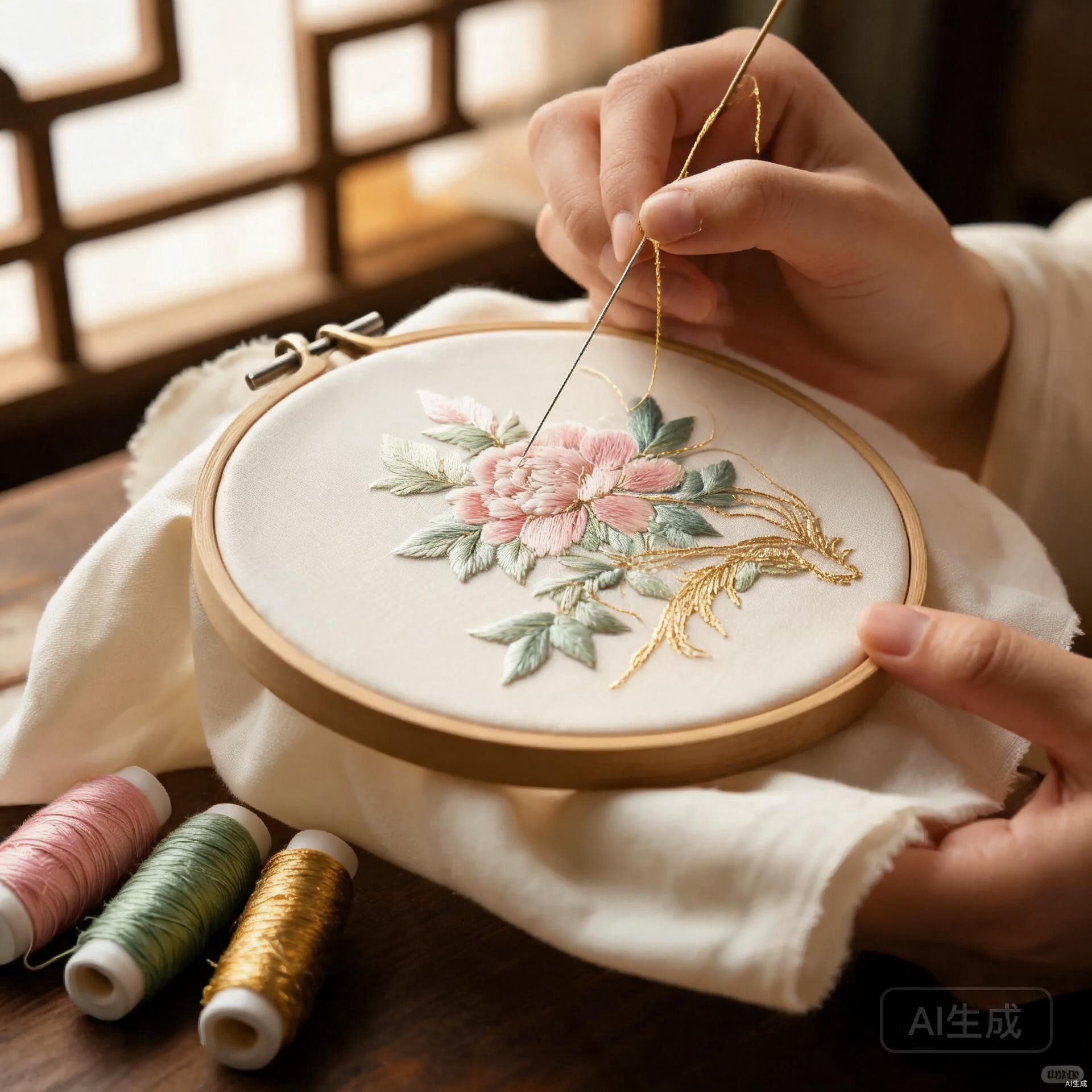
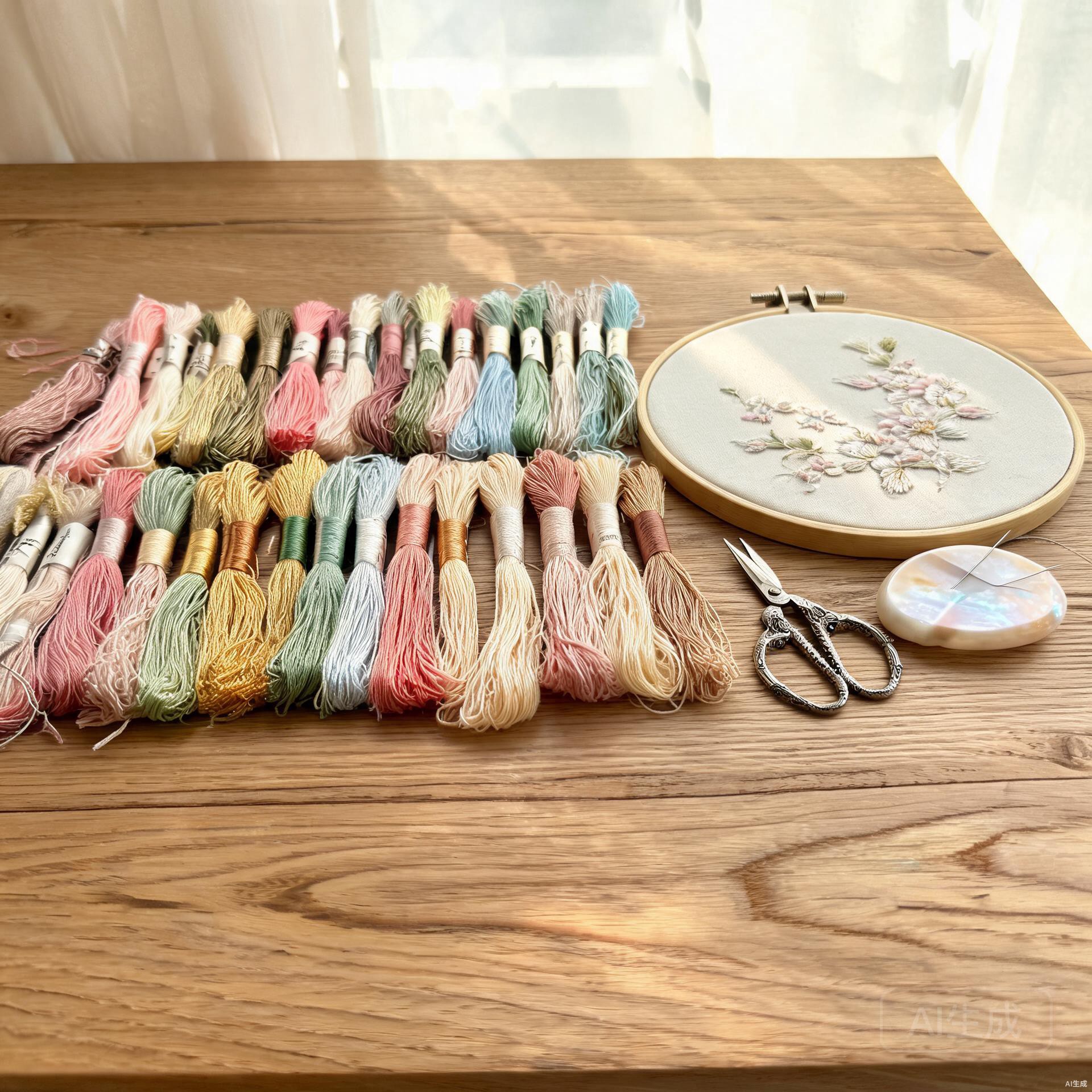
Suzhou embroiderers work with pure mulberry silk threads dyed with natural pigments — indigo, madder root, gardenia, and mineral ores. A single thread of raw silk is split into 16, 24, 32, or 48 strands using only fingertips and a needle. At 48-strand gauge, the thread is finer than a human hair and nearly invisible in air. This is called pi si (劈丝), a skill that takes at least five years to master.
THE STITCH
The Suzhou embroidery canon includes over 40 distinct stitch techniques. Ping zhen (平针) creates the smooth foundation. Tao zhen (套针) blends colors seamlessly. Luan zhen (乱针) mimics brushstrokes. Da zi zhen (打籽绣) creates textured knots. The most virtuosic is shuang mian xiu (双面绣) — double-sided embroidery where both faces are identical, all knots hidden between layers.
THE MASTERS
Shen Shou (沈寿, 1874–1921) revolutionized Suzhou embroidery by studying oil painting and photography to understand light, shadow, and perspective — then translating them into thread. Her portrait of Queen Elena of Italy won gold at the 1915 Panama-Pacific Expo. Today, fewer than 50 master-level Suzhou embroiderers remain worldwide.
Why It Matters Now
Suzhou embroidery is not a decorative relic — it is a living philosophy of patience, precision, and presence. Each stitch represents a choice made by the embroiderer in that single moment, never to be undone. In a world of instant gratification, this art form is one of the last refuges of deep attention.
At Tsatlee, we commission embroidered motifs directly from Suzhou artisans for select limited-edition bags and accessories. Each piece is numbered and documented — because the hands that made it are as finite as the craft itself.
Suzhou embroidery is the art of patience. Each stitch is a moment of presence — a meditation made visible in silk. When you carry it, you carry two thousand years of quiet mastery.